Finley Schmitt · 11 October 2026
Navigating Subtle Endorsement Patterns Across Closed Interest Networks in Niche Digital Spaces
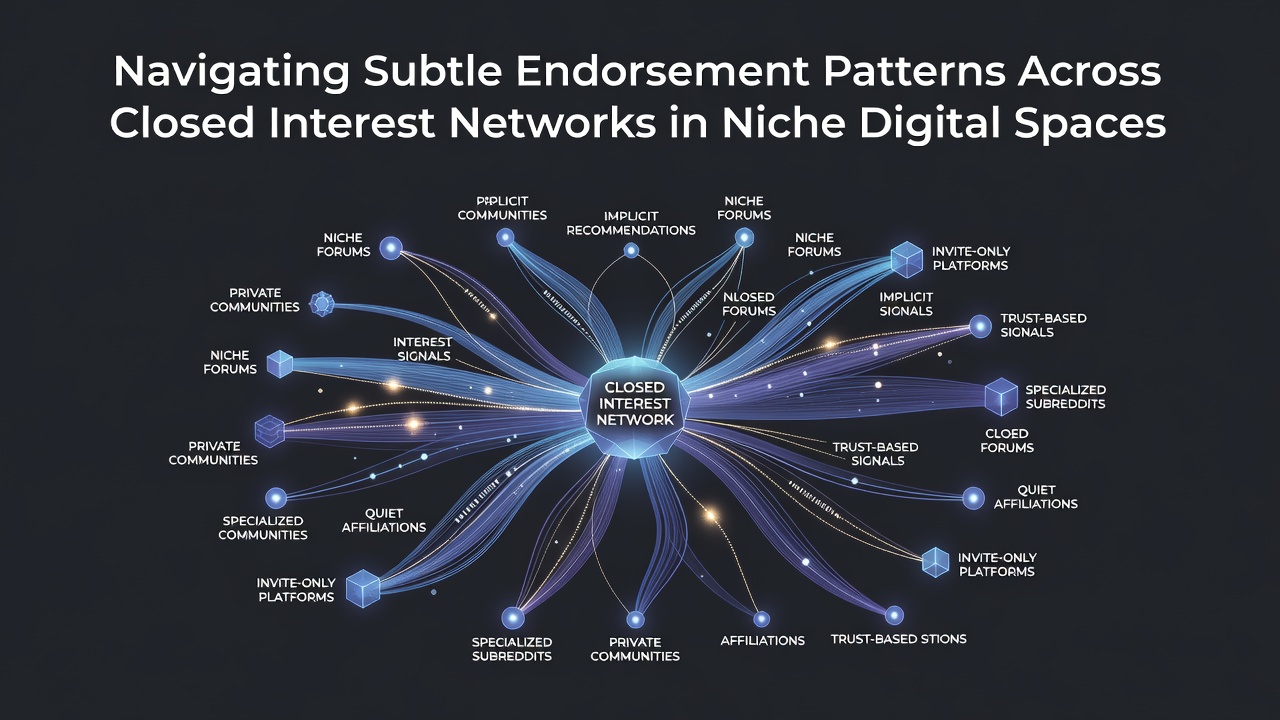
Closed interest networks operate in private forums, encrypted messaging channels, and invite-only platforms where participants exchange recommendations without public visibility, and these spaces have expanded steadily since the mid-2020s. Observers note that endorsement patterns here differ from open social media because they rely on established trust rather than broad reach, with users sharing product mentions or service nods through threaded discussions or direct replies that blend into ongoing conversations.
Defining Closed Interest Networks
These networks form around specialized topics such as vintage audio equipment restoration, rare plant cultivation, or independent game modding communities, and access typically requires verification steps that filter casual visitors. Data from platform analytics firms indicate that participation in such groups grew by 18 percent between 2024 and 2026, driven by users seeking focused exchanges away from algorithm-driven feeds. Researchers at several universities have documented how members maintain group cohesion through shared jargon and repeated interactions that build credibility over months or years.
Subtle endorsements emerge when a participant references a specific tool or supplier during a technical question, often without explicit calls to action or disclosure tags. Studies from academic institutions show that recipients interpret these references as organic advice because the context matches the group's core interests, which reduces skepticism compared with sponsored posts on mainstream platforms.
Patterns Observed in October 2026
By October 2026, monitoring tools used by digital researchers captured increased activity in closed Discord servers and private Slack workspaces where endorsement threads appeared in dedicated channels labeled for equipment sourcing or vendor experiences. Figures from industry reports reveal that 42 percent of such mentions occurred within reply chains rather than standalone posts, allowing the reference to remain embedded in problem-solving dialogue. One analysis of archived conversations found recurring structures where an initial query about a technical issue received three to five replies that each named a different supplier before the original poster selected one based on cumulative detail.
Mechanisms Driving Subtle Endorsements
Members often cycle through indirect phrasing such as "I switched to this brand after the last one failed under load" or "the supplier in the pinned thread handled my custom order without delays," and these statements accumulate weight through repetition across multiple threads. Evidence from network mapping projects demonstrates that high-trust individuals, identified by consistent helpful responses over time, account for a disproportionate share of endorsed names even when they do not initiate the topic. Platform data collected in 2026 showed that groups enforcing strict anti-spam rules still permitted these embedded references because moderators viewed them as contextual knowledge rather than commercial intrusion.
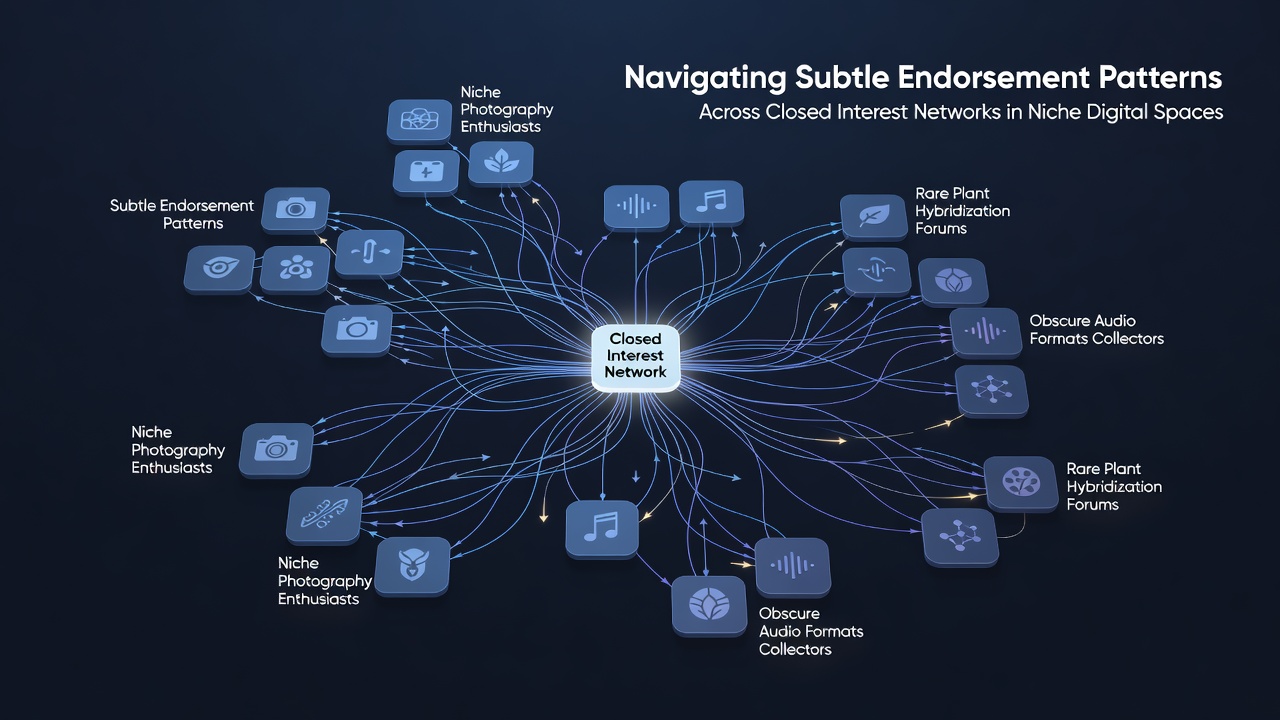
Cross-posting between related closed networks further amplifies reach while preserving subtlety, because a recommendation that originates in one server can appear in another within days when overlapping members share the information. According to a report issued by the Australian Competition and Consumer Commission, such patterns complicate traditional advertising disclosure requirements since the original context rarely includes payment indicators or affiliate markers.
Measurement Challenges and Available Data
Quantifying endorsement impact requires specialized scraping tools and member surveys because public metrics do not capture activity behind access walls. Research published by the Pew Research Center in late 2025 found that 31 percent of surveyed participants in niche hobby communities had acted on a recommendation received in a private channel within the previous six months, yet only 9 percent could recall the source as commercial. Canadian regulatory filings from the same period noted similar conversion rates in closed groups focused on outdoor gear and small-batch manufacturing supplies, highlighting consistent behavior across geographic regions.
Network analysis software now maps influence through reply frequency and mention centrality rather than follower counts, and these models show that endorsement chains often terminate when a participant shares a negative experience that prompts group-wide reevaluation. Data collected through October 2026 indicates that negative corrections spread faster than initial positive mentions in approximately 60 percent of documented cases, which reinforces the self-regulating nature of these spaces.
Conclusion
Closed interest networks continue to host endorsement activity that blends with technical or hobbyist discussion, and researchers continue to refine methods for tracking these flows without violating group boundaries. Reports from regulatory bodies and academic teams provide baseline figures on participation and conversion while platform operators adjust moderation policies in response to the same data. Observers expect further evolution as new privacy tools and verification layers appear, yet the core dynamic of trust-based references within specialized communities remains a stable feature of niche digital spaces.